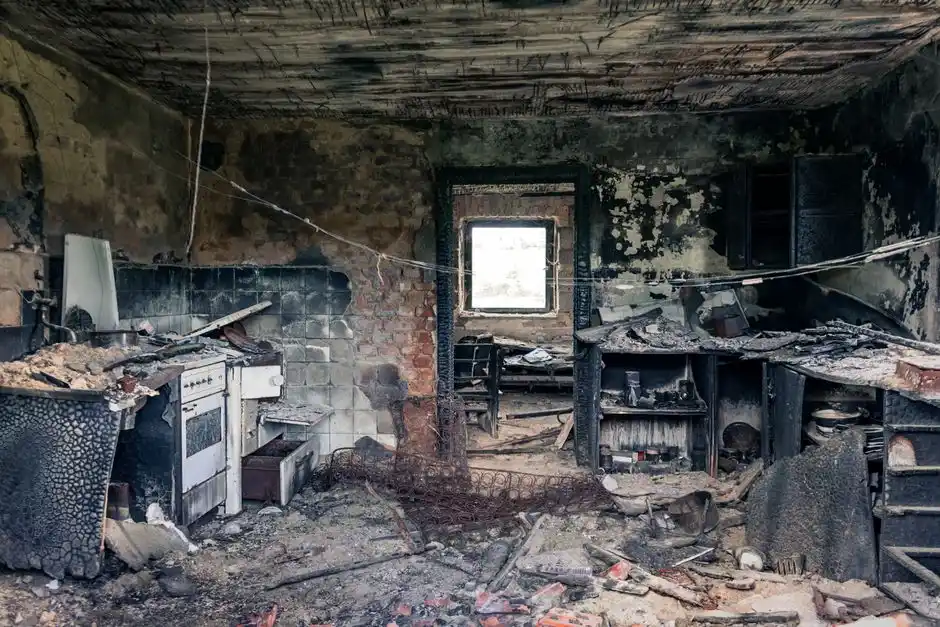
Hidden water damage after firefighting is the moisture that soaks into wall cavities, subflooring, and insulation while firefighters are putting out the flames - and it rarely shows itself right away. You identify it by watching for warped baseboards, musty odors, bubbling paint, soft drywall, and unexplained humidity spikes in the days after the fire. This guide walks you through the exact signs we look for in Gonzales homes, how to check for them yourself, and when to bring in a professional before mold takes hold.
Fire crews use thousands of gallons of water to knock down a house fire. That water has to go somewhere, and gravity pulls most of it into your floors, walls, and ceilings. What looks like a contained fire scene is often a water damage scene underneath.
Why Firefighting Water Causes Hidden Damage
Firefighting water causes hidden damage because it travels through paths you can't see - inside wall cavities, under flooring, and through ceiling joists - and stays there for weeks. A standard fire hose moves 100 to 250 gallons per minute. Even a 20-minute knockdown can push 2,000 to 5,000 gallons into a 1,500-square-foot home.Water follows the same routes as air. It slips behind drywall, pools on top of vapor barriers, and soaks into the paper facing on insulation. In Gonzales, where many homes sit on slab foundations, that moisture has nowhere to drain. It just sits.
Within 24 to 48 hours, that trapped moisture starts feeding mold spores that were already in the air. By day three, you can have visible mold growth inside a wall you never touched. By day seven, structural wood starts to soften.
This is why we treat every fire loss as a water loss too. The fire damage is obvious. The water damage is the quiet problem that costs homeowners the most money down the road.
Signs of Hidden Water Damage Gonzales LA Homeowners Miss
Signs of hidden water damage Gonzales LA homeowners miss most often show up in the first week after a fire - and they're easy to write off as fire-related when they're actually moisture-related. Here's what to watch for.
- Warped or cupping baseboards. Wood baseboards swell when they absorb water. If the bottom edge is separating from the wall or feels spongy, moisture is trapped behind it.
- Bubbling or peeling paint. Paint traps water vapor. When moisture builds up behind it, the paint blisters and peels away from the drywall.
- Musty, earthy odors. A smell like wet cardboard or old dirt means mold is already growing somewhere you can't see.
- Soft or sagging drywall. Press gently on the wall near the fire area. If it gives, the paper facing is saturated.
- Staining on ceilings below the fire. Brown rings or yellow halos on a first-floor ceiling usually mean water is sitting in the second-floor subfloor.
- Sticking doors and windows. Wood swells when it absorbs moisture. If doors that used to close easily now drag, the frame is wet.
- Cold or damp spots on floors. Bare feet pick up what eyes miss. If one section of floor feels cooler or damper than the rest, that's a sign.
We see these signs constantly in older Gonzales neighborhoods where homes were built before modern vapor barriers were standard. If you notice two or more of them, assume there's moisture you can't see yet.
How Do I Identify Hidden Water Damage After Firefighting in Gonzales LA?
You identify hidden water damage after firefighting in Gonzales LA by combining your senses with a few simple tools - smell, touch, sight, and a $20 moisture meter from any hardware store. Start with a walkthrough.
Walk every room that shares a wall or ceiling with the fire area. Look at the base of walls, under sinks, around door frames, and along ceiling seams. Run your hand along the drywall. It should feel room temperature and dry. Any cool, clammy, or soft spot is a red flag.
Smell matters more than people think. Mold has a distinct musty odor that gets stronger in closed rooms. If a closet or bathroom smells different than the rest of the house, close the door for an hour and smell again. The concentration will tell you if there's growth inside.
A basic pin-type moisture meter reads the water content of drywall and wood. Normal readings in Gonzales homes run 8 to 12 percent. Anything above 16 percent means active moisture. Above 20 percent, and you're looking at conditions where mold grows in under 48 hours.
If you want a deeper look without cutting into walls, a thermal imaging camera shows temperature differences behind drywall. Wet insulation reads cooler than dry insulation. We use thermal cameras on every inspection because they find moisture that meters miss.
For homeowners who want a thorough, documented assessment, our water damage restoration Gonzales LA team walks the whole structure, maps the moisture, and gives you a written scope before any work begins.
What Are the Signs of Water Damage After a Fire in Gonzales?
The signs of water damage after a fire in Gonzales break into three categories: visible, sensory, and structural. Visible signs include stains, bubbling paint, and warped trim. Sensory signs are smells and damp feelings. Structural signs are the ones that cost the most - sagging floors, soft joists, and cracked foundation edges.Gonzales sits in Ascension Parish, where the water table runs high and the soil stays damp most of the year. That matters because a wet slab wicks moisture upward into flooring. After a fire, when the slab is already saturated from firefighting water, that wicking accelerates.
We've pulled up laminate flooring in homes off Highway 44 and found standing water underneath - days after the fire - because the water had nowhere to evaporate. The homeowner had no idea. The floor looked fine from above.
Another sign people miss: increased utility bills. If your air conditioner is running longer than normal in the weeks after a fire, it's fighting extra humidity inside the house. That's a moisture problem, not an AC problem.
If you're in a neighboring community and seeing these signs, our Fire Damage Restoration in Prairieville team handles the same inspections and drying work just up the road.
Tools and Tests We Use During a Water Damage Inspection Gonzales
A professional water damage inspection Gonzales homeowners can trust goes far beyond a visual walkthrough. Here's what we bring to every job.
- Pin-type and pinless moisture meters. These read moisture content in drywall, wood, and concrete without damaging surfaces.
- Thermal imaging cameras. These show temperature differences behind walls, under floors, and above ceilings - the fastest way to find trapped water.
- Hygrometers. These measure relative humidity in the air. We want indoor humidity below 50 percent. Above 60 percent, mold grows.
- Borescope cameras. A small camera on a flexible rod lets us look inside wall cavities through a 1/4-inch hole.
- Delmhorst or Tramex meters for deep readings. These give us moisture content in structural lumber, which tells us whether joists and studs are salvageable.
We log every reading and compare it to dry standard. That documentation matters for insurance claims and for proving the structure is dry before we close it up.
Once we know where the water is, we extract it with truck-mounted units, then set up structural drying and dehumidification Gonzales LA equipment to pull moisture out of the air and materials. A typical Gonzales home takes three to five days to dry. Larger homes or homes with hardwood floors can take seven to ten.
Common Mistakes Homeowners Make After a Fire
The biggest mistake homeowners make after a fire is assuming the water will dry on its own. It won't - not inside a wall cavity, not under a slab, and not inside insulation. Here are the others we see.
- Running the AC to dry things out. Your AC removes some humidity, but it also circulates mold spores through the whole house. Don't do it.
- Opening windows during a Louisiana summer. Gonzales humidity runs 70 to 90 percent in summer. Opening windows makes the problem worse, not better.
- Throwing away wet items too soon. Many contents - photos, documents, furniture - can be saved with professional cleaning. Wait for an assessment.
- Painting over water stains. Paint traps moisture and hides the evidence. The stain will bleed through within weeks, and mold will grow behind it.
- Skipping the attic and crawlspace. Water travels down, but it also travels sideways. We find moisture in attics and crawlspaces on almost every fire job.
- Waiting on the insurance adjuster before drying. Mold doesn't wait for paperwork. Start mitigation immediately and document everything.
If you've already made one of these mistakes, don't panic. We can still assess the damage and stop it from getting worse. The key is acting within the first week.
When to Call a Professional
Call a professional when you find moisture above 16 percent, smell musty odors, or see any of the visible signs listed above. Those three signals mean water is trapped where it can't dry on its own.
You should also call if the fire happened more than 48 hours ago and no drying equipment has been running. Mold can start colonizing within 24 to 48 hours of water exposure. By the time you see it, the colony is already established.
Our team at firedamageremovalgonzales.com handles the full scope - water extraction, structural drying, mold prevention, smoke and soot cleanup, and contents restoration. We work directly with your insurance adjuster and document everything with photos, moisture readings, and daily logs.
If you're in a nearby community like Geismar or Saint Amant, we serve those areas too. Our Fire Damage Restoration in Geismar and Fire Damage Restoration in Saint Amant teams run the same process with the same equipment.
For homeowners dealing with the immediate aftermath - broken windows, exposed roof, or a structure that isn't secure - we also provide emergency board-up services Gonzales LA to keep the weather and looters out while restoration is underway.
Frequently Asked Questions
How do I identify hidden water damage after firefighting in Gonzales LA?
Check for warped baseboards, musty odors, bubbling paint, and soft drywall within the first week. Use a moisture meter - readings above 16 percent mean active moisture. If you find two or more signs, call a professional for a thermal imaging inspection.
What are the signs of water damage after a fire in Gonzales?
Look for ceiling stains, sticking doors, damp floors, and increased humidity. Musty smells and higher utility bills are also common. In Gonzales, slab foundations and high water tables make hidden moisture more likely than in drier climates.
Who does water damage restoration near me in Gonzales Louisiana?
Our team at firedamageremovalgonzales.com provides water damage restoration in Gonzales Louisiana, including emergency water extraction, structural drying, and mold remediation. We respond 24/7 and work directly with your insurance company.
Can hidden water damage cause mold in Gonzales?
Yes. Mold can begin growing within 24 to 48 hours of water exposure. Gonzales humidity - often 70 to 90 percent in summer - accelerates growth. If moisture stays above 16 percent for more than two days, assume mold is forming.
How long does it take to dry a house after firefighting water?
A typical Gonzales home takes three to five days with professional drying equipment. Homes with hardwood floors, thick insulation, or slab foundations can take seven to ten days. We monitor moisture daily and don't stop until readings hit dry standard.
Get Help with Fire Damage Restoration in Gonzales
Hidden water damage after a fire gets worse every day you wait. Our team finds it, dries it, and documents everything for your insurance claim - so you can get back into your home faster.
Call us at +1 (225) 545-1003 for a same-day water damage inspection in Gonzales and the surrounding Ascension Parish communities.